One for the House, One for the World: In Defence of the Practice Garment
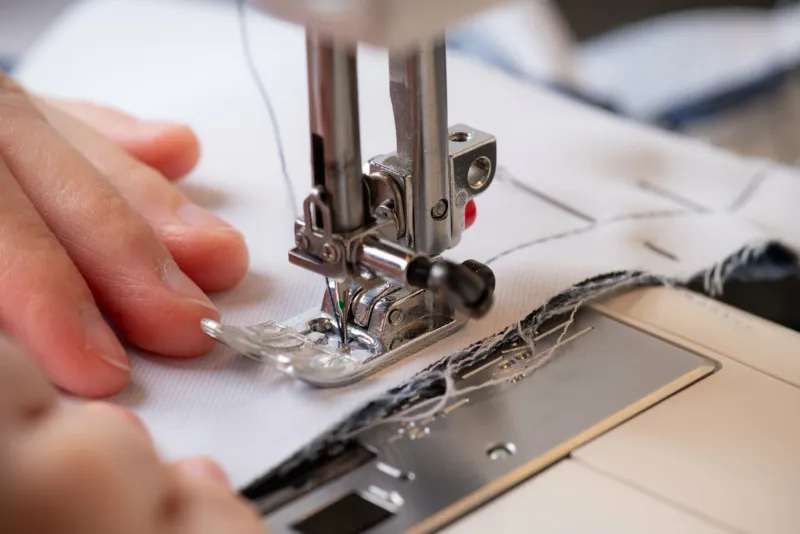
Photo: sewing calico practice garment toile on dress form with pattern pieces, via static.icansewthis.com
There's a particular kind of sewing paralysis that doesn't look like paralysis. It looks like a very tidy sewing room, a folded length of expensive wool, a pattern still in its envelope, and a person saying 'I'll do it properly when I've got a clear run at it.'
I've been that person. So has half of every sewing group in Suffolk. And I've come to think the culprit isn't lack of time or skill. It's the quiet conviction that the first thing you make from a pattern ought to be good.
It oughtn't. The first one should be rubbish.
The tyranny of the wearable toile
Somewhere along the line we absorbed the idea that a test garment is only worthwhile if it's also a finished garment. 'Wearable toile' is a lovely phrase and a useful goal for an experienced maker with a well-fitted block. For the rest of us it's a trap, because it smuggles the standard of the final object into the practice run.
And so the calico stays folded. Because if the first version has to be wearable, you can't use the cheap stuff. And if it's not the cheap stuff, you'd better be sure of the fit. And you can't be sure of the fit, because you haven't made it yet. Round and round, until it's next November and the pattern is still in the drawer.
What a first attempt actually buys you
A practice garment isn't about the garment. It's about buying information, cheaply, in a form you can hold in your hands.
It teaches you the order of construction. Not the order written in the instructions, which you'll follow on the real thing — the order your hands want to work in. Where the sleeves actually get set in. Which seams want pressing before the next one goes over them. Which bit of the pattern you'll need to read three times with a cup of tea.
It teaches you what your machine wants. Tension on this cloth. Whether the needle is blunt. How the overlocker behaves on a curve. All of that knowledge is expensive on silk and free on a charity-shop bedsheet.
It teaches you about fit in three dimensions. A pattern adjustment made on paper is a guess. A practice garment is evidence: you can pinch it, pin it, sit down in it and see where it pulls.
It teaches you where the pattern instructions lie. Every pattern has one instruction that is technically correct and practically daft. You only find it the first time through.
Cheap cloth, honestly chosen
There's a difference between cheap and unsuitable. A practice garment needs to behave roughly like the real cloth — similar weight, similar drape, similar amount of give — or it'll teach you the wrong lessons.
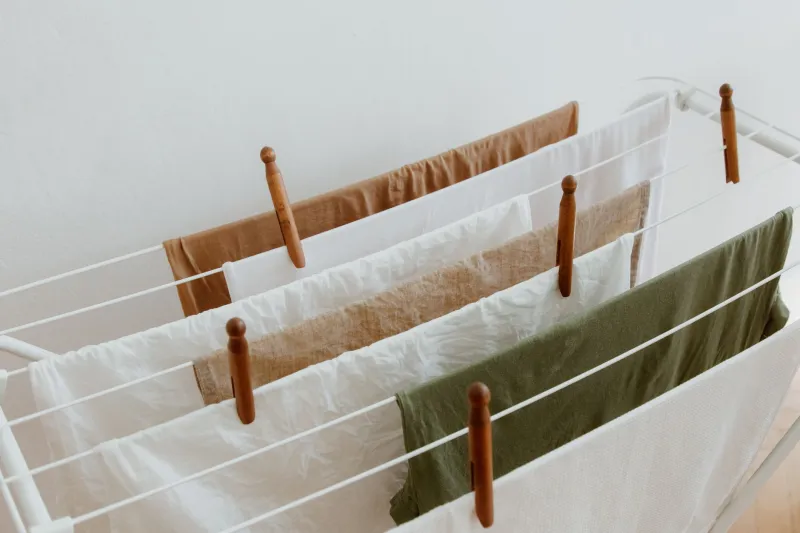
For wovens, calico is the traditional answer and still a good one, though it's not cheap as it once was. Old duvet covers from the charity shops along the high street are excellent and cost buttons. So are curtain linings, worn-out cotton sheet sets, and the plain-coloured remnants at the back of a fabric stall. For stretch patterns, look for cheap jersey of roughly the same weight; a heavy cotton interlock will not tell you the truth about a fine viscose knit.
What you're after is cloth you can cut into without flinching. The moment you flinch, you've lost the point.
Rules for a deliberately disposable garment
The whole thing works better with a few agreed permissions:
- Finish it roughly. Seams overlocked or zigzagged, no French seams, no binding, no hand-finished anything.
- Don't skip the structure. Interfacing, stay tape and seam stabilising all change the fit. Leave them out and you'll be fitting a different garment.
- Mark everything on the fabric, in pencil or washable marker. 'Took in 2cm at side seam.' 'Shoulder too wide by 1.5cm.' Write it on the toile itself where it happened.
- Photograph it. Front, side, back, in decent light. You'll want the pictures when the toile has gone to the rag bag.
- Don't start again until you've written the changes on the pattern. This is the step everyone skips and it's the only one that pays forward.
Wearing it anyway
Here is the bit I've come to like. A practice garment is not a failure — it's a garment at the bottom of the wardrobe ladder, and the bottom rung gets used more than we admit.
Gardening. Painting the spare room. A quick trip to the shops when nobody's looking. Sitting on the floor with a child. Sleeping in, if it's a nightie. There's a whole category of life that doesn't require a neat hem, and a rough first version slots into it perfectly.
Wearing it also gives you data you can't get from a mirror. Does it ride up when you sit down? Do the armscyes dig in after an hour? Does the neckline gape every time you reach for something? A toile in a bag tells you nothing about comfort. A toile on your body for a Sunday afternoon tells you everything.
The heirloom trap
Beccles has a long memory for making things last, and that's a virtue. But make-do-and-mend was never about treating every object as precious. It was about getting value out of things, including the rough ones, including the ones you made as a rehearsal.
Not everything you sew needs to be good. Some of it needs to be instructive. The good one comes second, and it comes faster, and it fits — because the ugly one went first.