Shop the Shelf First: A Beccles Sewist’s Pledge for a Quieter November
The inbox started early this year. By the second week of November 2026, the Black Friday previews were already arriving — 30% off fabric, mystery bundles, ‘last chance’ notions, free shipping if you spend just a little more. It is clever, persistent and designed to make a well-stocked sewing room feel suddenly incomplete.
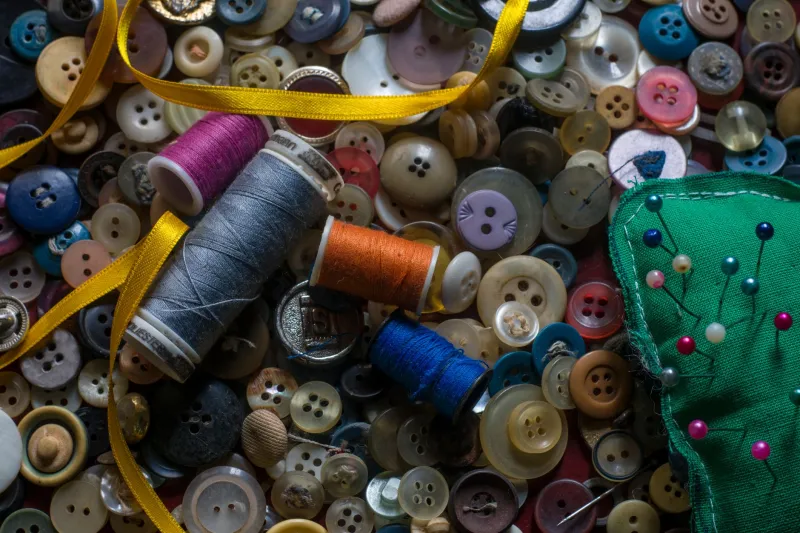
But if you sew in Beccles, you probably already know the truth: there is plenty here. There is the half-metre of corduroy bought for a project that changed shape. There is the jar of buttons inherited from a neighbour. There is the coat that needs a new zip and the trousers that have been waiting since October for a proper hem. The sales are loud, but the shelf is quietly full.
This is not a lecture about frugality. It is a pledge, and a fairly gentle one at that. Before the baskets fill and the parcels stack up by the door, give yourself a fortnight of making do. Not because buying fabric is wicked, but because making with what you already own is a skill worth keeping sharp.
The inbox is loud. The stash is quieter.
There is a particular kind of November tiredness that makes a sale feel like a solution. The afternoons are drawing in, the lamp goes on earlier, and a parcel arriving feels like a small event. It is easy to confuse that feeling with needing more cloth.
Sewists are especially susceptible because our supplies are useful. A metre of wool is not a frivolous purchase; it is a future coat. A packet of bias binding is not clutter; it is possibility. But useful things still accumulate, and a bargain is only a bargain if it becomes something you actually wear, use or give away.
The anti-Black Friday pledge is not about deprivation. It is about attention. It asks you to look at what is already in the room — the fabric, the patterns, the garments that only need a small push — and to let that be enough for a while.
What the pledge actually asks
Write it on the back of an envelope and pin it above the machine. The pledge has three parts, and none of them require you to be an expert. They simply ask you to make do before you buy new.
1. Mend the thing you keep moving from chair to chair
You know the one. The cardigan with the loose button. The skirt with the split seam. The coat hanging on the back of the door because the lining has gone at the cuff. It has been moved from chair to chair for weeks, perhaps months.
This week, give it ten minutes. Sew the button back on with thread you already have. Turn up the hem. If the repair is beyond your skills or your machine, book it in with a local alterations service instead of replacing the garment. A repair is not a failure of imagination; it is a sensible use of what already exists.
2. Rework one garment you already own
Choose something that no longer earns its place — a dress that fits oddly at the waist, a shirt with a tired collar, a jumper that has shrunk just enough to be annoying. Can it become something else? A dress can become a skirt. A shirt can become a project bag or a set of useful pockets. A jumper can become a hot water bottle cover or a pair of mittens for the allotment.
Reworking is not always about a full transformation. Sometimes it is simply moving a button, shortening a sleeve or adding a patch where the elbow has worn thin. The goal is to keep the garment in use, not to produce something Instagram-perfect.
3. Make one project entirely from the stash
No new cloth. No ‘just popping out for a zip’. Use what you have: the remnants bin, the inherited fat quarters, the buttons in the tin. Make a zip pouch, a set of cloth napkins, a simple tote or a bias-bound pincushion. The constraint is the point. It teaches you to see your supplies as a resource rather than a backlog.
If you genuinely need a notion to finish the job, that is fine. Buy the one thing, from a local shop if you can, and carry on. The pledge is not a test of purity; it is a nudge towards using what is already there.
Where to find notions without the sales
Beccles is not short of quiet sources. The market is a good place to start for buttons, thread and the odd piece of vintage haberdashery. The charity shops around town often have sewing boxes, curtains and unloved lengths of fabric that can be washed and reused. Ask in local sewing groups or among neighbours — a button tin passed around a circle of makers can keep several projects going.
If you do need to buy new, buy local where you can. The small independents and market stalls may not have the huge discounts of the online giants, but they can answer questions, sell you a single zip and let you feel the cloth before you commit. That is worth something.
A gentle framework for the sale season
Resisting the sales does not have to mean ignoring them completely. A few small rules can help:
- Wait twenty-four hours before buying anything that is not needed for a project already underway.
- Measure twice. A bargain that does not fit your plan is not a bargain.
- If you do buy, buy for a specific garment or gift, not for a vague future self.
- Unsubscribe from the loudest emails. You can always resubscribe in January.
The point is not to be perfect. The point is to make a deliberate choice rather than an automatic one.
The quieter abundance
By late November, Beccles will be dark by four and the lamp over the sewing machine will feel like the best place in the house. That is the real luxury: a warm room, a small pile of mending, a project that costs nothing but attention.
The anti-Black Friday pledge is not a boycott of cloth. It is a promise to shop the shelf first, to mend before replacing and to let the stash have its say. Make do, make well and make it yours. The sales will still be there if you need them. The shelf, for now, is enough.