Envelope Diplomacy: What Your Unloved Patterns Could Do for Beccles
Every sewing shelf has a few envelopes that never quite made it. Maybe the shoulders were wrong, the size range stopped short, or you bought it in a burst of optimism and then discovered it wanted four metres of wide wool and a patience you did not have that winter. The pattern itself is not bad. It has simply been waiting for a different body, a different fabric, or a different Beccles maker altogether.
That is where a pattern amnesty comes in. Not a sale, not a swap meet with fluorescent lighting and hard bargaining, but a calm table of envelopes with honest notes attached. You bring what you have fallen out of love with. Someone else takes it home and finds the shape they have been looking for. Nobody has to pretend the pattern was perfect. It just gets another outing.
Start with the drawer, not the dream
A pattern amnesty begins at home, ideally on a grey afternoon when you are not trying to sew anything ambitious. Empty the drawer or the box under the bed onto a clear surface. Sort into three piles: keep, swap, and recycle. The keep pile should be small and unsentimental. If you have owned a pattern for years, traced it twice, and never made it up, it is probably a swap candidate. If it is missing the instruction sheet and half the bodice, it is recycling.
Be honest about why a pattern is going. “Did not suit me” is a perfectly good reason. “Bought for a wedding in 2019” is another. You do not need to write a confession, but a short note is more useful than a blank envelope. Something like “Size 14–22, view B made up nicely in linen, but the sleeves run narrow” saves the next person a guess. That is the whole spirit of the thing: less mystery, more mending of the pattern chain.
The envelope is the handshake
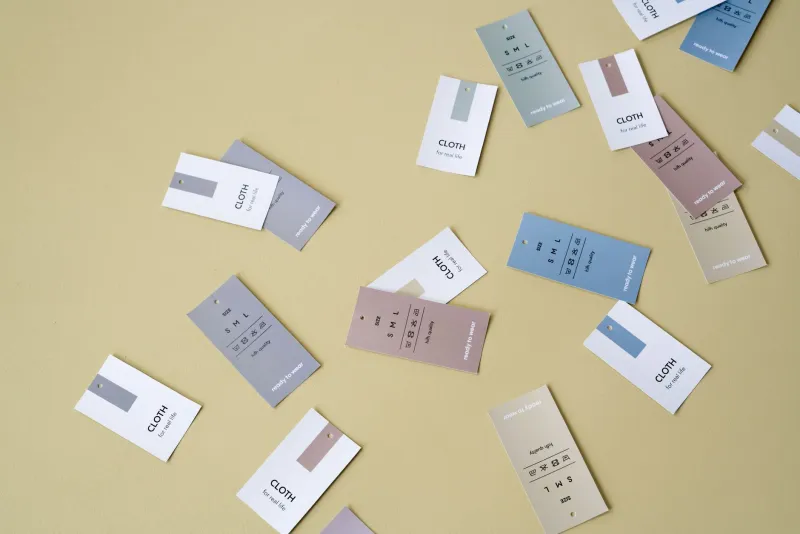
A pattern swap only works if the envelopes can speak for themselves. Before you hand anything over, give it a label. A sticky address label or a strip of masking tape across the front is enough. Include the brand, the pattern number, the size range, and whether the pieces are uncut, cut, or traced. If it is cut, say which view and which size. If you have added seam allowance, shortened a bodice, or redrawn a collar, say so. Those small alterations are not damage; they are information.
Traced pieces deserve special care. Repackage them in a clear zip bag or a sturdy paper envelope, with the original envelope alongside if you still have it. Write a note that covers the basics: “Traced from size 12, added 1.5cm seam allowance, lengthened sleeve by 3cm.” If you have kept the original pieces uncut, even better, but do not pretend a traced set is untouched. Honest notes are what make a second-hand pattern useful rather than a lucky dip.
What belongs on the table
A good swap table is not a dumping ground. Bring patterns that are complete enough to use, or clearly labelled as partial. Leave out anything damp, mouldy, or smelling of a loft. Leave out borrowed patterns that belong to a friend. If you have printed PDF patterns, you can include them, but be clear about page counts and whether they have been assembled. A neatly folded printed copy with a note is welcome. A loose stack of unlabelled A4 sheets is not.
It also helps to group things. Adult garments in one area, children’s patterns in another, bags and homewares somewhere else. Add a small sign for “uncut” and “cut/traced” so people can browse according to their confidence. If you are running the swap in a Beccles venue, a couple of trestle tables and a tea urn will do more for the atmosphere than any elaborate signage. The point is to make it easy for someone to pick up an envelope, read the note, and decide.
A small swap, run gently
You do not need a grand event. A church hall, a library meeting room, or a corner of a community centre can hold a very good pattern amnesty. Set a drop-off window so the table is not a free-for-all, and ask people to label their patterns before they arrive. A simple one-for-one rule keeps things fair, though it is worth having a few spare patterns for anyone who is new to sewing and has nothing to swap yet. The aim is to pass things on, not to police the table.
Put someone sensible in charge of the tea. Keep the table tidy. Have a box for leftovers and a plan for where they go afterwards, whether that is a school textiles department, a charity craft group, or a scrap-store scheme. Patterns that nobody wants can still be recycled, but the paper envelopes and instruction sheets should be separated out first. A swap is meant to reduce waste, not create a new pile of it.
The quiet social bit
Here is the part that does not fit on a checklist. A pattern swap is a good excuse to talk to people you would otherwise only nod at across the market. Someone will pick up a wrap dress and say they made it three times in the nineties. Someone else will admit they have never sewn a buttonhole and are terrified of starting. You will discover that the pattern you found impossible is the one another Beccles maker has been hunting for since spring.
That is the real exchange. Not just paper and tissue, but a bit of local knowledge. “This one runs short in the body.” “That collar works better in a lighter weight.” “I used the skirt from this one with the top from that one.” It is envelope diplomacy, conducted over a brew and a biscuit. The pattern gets a second outing. You get a clearer shelf. And somewhere in Beccles, a maker gets the shape they have been looking for.
So before you buy another pattern you are not sure about, look at the ones you already own. There may be a quiet amnesty waiting in your sewing drawer.