Let the Air Do the Work: Caring for Handmade Clothes Through a Beccles Winter
There is a particular kind of damp that settles over the Waveney valley in winter. It is not quite rain and not quite fog, but it finds its way into hallway cupboards, under-bed boxes and the sleeves of a wool coat that has been out on the school run. For anyone who sews, knits or alters their own clothes, that moisture is worth taking seriously. Not with a sense of drudgery, mind, but with the same quiet care you gave the garment when you were pinning it together.
Handmade clothes ask for a little more thought than shop-bought ones. A jumper you knitted has taken hours. A coat you re-lined has already had one life extended. Looking after them through a Suffolk winter is less about laundry and more about stewardship — keeping the air moving, keeping the wool clean, and keeping the moths guessing.
Start with the air, not the heat
The instinct when something is damp is to put it on a radiator. Please resist. Direct heat is unkind to wool fibres, and it can leave a jumper feeling stiff and slightly sorry for itself. It also pushes moisture into the room rather than out of the garment, which is the opposite of what a small Beccles terrace actually needs.
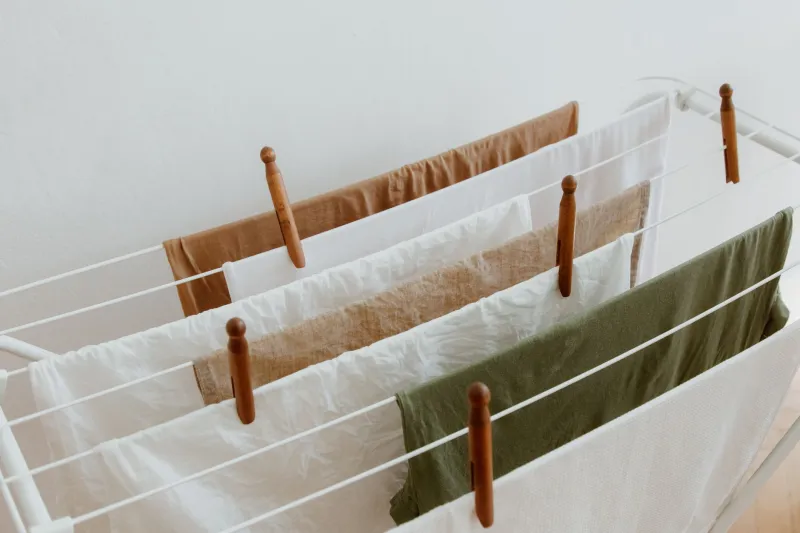
A simple wooden airing rack in a room with a window cracked open for ten minutes is far better. Space the clothes out so air can pass between them. If you have a dehumidifier, this is the moment to use it — not blasting the garment, just quietly drying the room around it. Turn jumpers inside out and shake them before they go on the rack. A gentle brush with a clothes brush while dry lifts dust and surface grit without agitating the fibres.
If you are drying a hand-washed wool jumper, lay it flat on a towel on the rack rather than hanging it. Hanging wet wool is how you get shoulders that reach the elbows.
The twenty-four-hour rule
Wool is cleverer than we give it credit for. It can refresh itself if it is given air and time. Instead of washing a jumper after every wear, try the twenty-four-hour rule: wear it, then hang it on a wide wooden hanger somewhere with a breeze — a spare room, a curtain rail, the back of a door that is not in a steamy bathroom — and let it rest for a day before it goes back in the drawer.
This works especially well for the layers we wear in Beccles from November onwards: the woolly hat, the fingerless gloves, the cardigan that lives on the back of the chair. A light steaming over a kettle — holding the garment a good arm's length away, never touching the water — can smooth creases and freshen the surface. Or hang it in the bathroom while you shower, as long as the room is not already damp and the garment is not in the direct spray.
Washing wool without fear
Eventually, a wash is needed. Wool can be washed, but it likes cool water, a gentle detergent and no drama. Fill a basin with lukewarm water, add a wool-specific wash, and submerge the garment without rubbing. Leave it for ten minutes. Rinse in water of the same temperature — sudden changes are what cause felting. Press the water out against the side of the basin; never wring.
Roll the jumper in a clean towel to absorb the worst of the moisture, then dry it flat, reshaping it as you go. A mesh drying rack is ideal. Keep it away from radiators and direct sun. If you are washing a handmade coat or a lined jacket, check the lining and seams first; sometimes spot cleaning with a damp cloth is the kinder option.
Blocking is just drying with intention
Blocking has a reputation for being fussy. Really it is just drying a garment in the shape you want it to be. For knitted hats, mittens and jumpers, a set of foam blocking mats and a few rustproof pins will do. Measure the dry garment, note the measurements, then pin the damp garment to those measurements and leave it alone until fully dry. In a damp Suffolk winter, that might take two days. Be patient.
For sewn garments, blocking mostly means pressing with care. Use a pressing cloth and a steam iron held just above the fabric rather than pressed down hard. Wool likes steam; it does not like being squashed.
Moths in a small Beccles home
Moths are the quiet enemy of a handmade wardrobe. They like dark, undisturbed places with a little moisture and a snack of protein-rich wool. In a small house, storage is often under the bed or in a hallway cupboard, which is exactly where they thrive.
Before anything goes away for the season, wash or air it thoroughly. Moths are attracted to body oils and food traces, not just the wool itself. Store clean knitwear folded in breathable cotton bags rather than plastic. Cedar blocks, lavender bags and clove-studded pomanders are traditional for a reason, though they need refreshing every few months. Vacuum the corners of drawers and wardrobes, and check the seams of stored clothes when you swap them over.
If you suspect moths in a second-hand find from a charity shop, seal it in a bag and put it in the freezer for forty-eight hours before washing. It is a small bit of faff that saves a lot of heartache.
A gentle weekly routine
None of this needs to take over your weekend. Ten minutes on a Sunday — shaking out the jumpers, checking the airing rack, swapping the lavender bags, brushing the coat — keeps everything in good order. Think of it as part of the making, rather than a chore that comes after it.
The clothes you stitched in Beccles are meant to be worn, not preserved behind glass. A little airflow, a little patience and a little respect for wool will keep them doing their job through many more East Anglian winters.