Wrapped Up Before the First Shiver: A Homemade Changing Cape for Lido Mornings

Photo: Photographer: Mosbatho, CC BY 4.0, via Wikimedia Commons
The car park at the Lido on a bright December morning is a study in quiet determination. People arrive in coats, walk out in swimsuits, and come back twenty minutes later with that particular pink about them that only cold water produces. What they wrap themselves in afterwards matters more than anyone admits.
A proper changing robe costs the sort of money that makes you wince. A homemade one, built from a bath towel that has gone thin at the edges and a wool blanket nobody wanted, costs about a fiver and an afternoon. Here is how to make one that actually works.
What the garment has to do
This is not a dressing gown. A cold-water changing cape has a specific job description:
- Cover you from neck to mid-calf, so nothing is exposed to a breeze off the Waveney while you wrestle with a sock.
- Have a hood, because wet hair on a cold morning is miserable.
- Overlap generously at the front, since modesty and warmth are the same problem here.
- Include pockets wide enough for both hands, and one that keeps a key and a phone off the ground.
- Dry quickly, or at least dry on a hook overnight without going sour.
Everything else is decoration.
Choosing cloth from what is already in the house
Old bath towels are the obvious starting point, and the slightly scratchy ones are better than the soft ones because they stay lofty after washing. A single towel will not cover a grown adult, so plan on two, or one towel plus a length of charity-shop blanket.
The best combination for Beccles weather is a wool or wool-blend blanket on the outside and towelling on the inside where it touches skin. Wool holds warmth even when it is slightly damp and shrugs off a breeze; towelling wicks the wet off you. If wool itches, line the hood and shoulders with an old cotton sheet.
Avoid anything heavy and slow-drying. A double layer of thick cotton towelling becomes a wet curtain at the bottom of the pool bag. Microfibre travel towels are excellent for the inner layer if you have one going spare. Fleece is warm, cheap and quick to dry, but it does catch on wet skin, so use it for the outer shell rather than next to the body.
Wash everything hot before you cut. You want any shrinkage to happen before the scissors come out.
The shape, without a paper pattern
You need two measurements. First, from the bony point of one shoulder down to mid-calf. Second, wrist to wrist with your arms held out a little, which is the width the cape needs to hang around you.
Cut one large rectangle: your shoulder-to-calf length, plus fifteen centimetres for a hem, by your arm-span width, plus thirty-five centimetres for the front overlap.
Fold it in half lengthways, so the fold is at the top and the selvedges meet at the bottom. At the centre of the fold, cut a shallow neck opening, about twenty centimetres wide and eight deep. Then cut straight down the centre front from neck to hem, so the cape opens like a coat.
For the hood, cut a rectangle about thirty-five by sixty centimetres, fold it in half across the short side and stitch the back seam. That gives you a simple pointed hood that sits well on a wet head without needing darts.
Assembling it in a sensible order
The sequence matters more than the stitching.
- Sew the hood to the neck opening, right sides together, matching the centre back.
- Join the shoulder seams if you cut the body in two pieces rather than one.
- Bind the front opening with bias tape made from an old sheet, or with blanket binding. This is the edge everyone sees, so give it a neat finish.
- Deal with the arm openings. Either leave the sides open from about thirty centimetres below the shoulder and bind the raw edges, or cut rectangular sleeves and set them in. Open sides are simpler and let you get dressed faster.
- Add pockets.
- Add the closure last, once you can try it on.
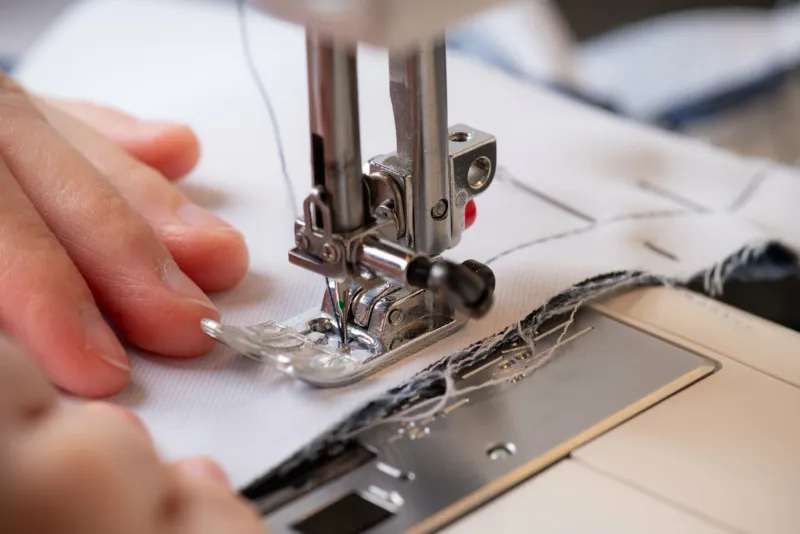
Thick layers need a size ninety denim needle, a longer stitch length and a walking foot if you have one. Use clips rather than pins on bulky seams, and do not fight the machine. If a seam is too thick to go under the foot, hammer it flat on a cutting board. Genuinely.
Pockets with a purpose
Put the hand pockets low and slightly forward, where your hands actually fall when your shoulders are hunched. A thirty-centimetre square, lined with a scrap of the same towelling, is about right.
Then add a small zipped pocket inside the front, or a patch pocket with a flap, sized for a phone and a car key. A short loop of webbing near the neck is handy for hanging the whole thing on a hook rather than over the back of a chair. Some swimmers like a deep back pocket for a hot water bottle; if that is you, sew it on before the binding.
Closures for numb fingers
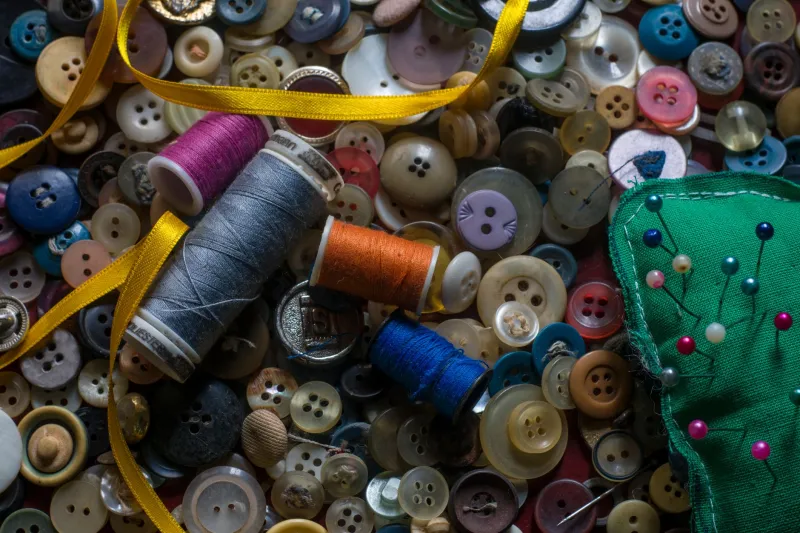
Small buttons are hopeless when your hands are cold and wet. Choose one of these instead:
- Toggles and cord loops — traditional, forgiving, easy to work one-handed.
- Large plastic snaps — quick, but they need to be set with a proper tool.
- Velcro — fastest of all, but noisy and it grabs hair and wool.
- A webbing belt and side-release buckle — secure, but fiddly in a hurry.
Toggles win, in my view. Three down the front, spaced evenly, with loops of strong cord on the opposite side.
Living with it
Hang the cape on a hook to air rather than draping it over a radiator, particularly if there is wool in it. Wash the towelling lining hot every few weeks, and brush the outer shell rather than washing it more than necessary.
And if you find yourself with half a blanket left over, there is probably someone at the Lido who would love one. The cold-water crowd in Beccles are a generous lot, and a spare changing cape is never spare for long.