Charity-Shop Bedspread, Heirloom Jacket: A Slow-Sew Project for Beccles Makers
Photo: SallyKerr, CC BY-SA 4.0, via Wikimedia Commons
Why a quilt coat is worth the fuss
There are few sewing projects as satisfying as taking something already loved and giving it a second life. A quilt coat does exactly that. You start with a charity-shop bedspread, maybe a little faded, maybe with a patch or two, and you finish with a jacket that feels like it has history before you have even worn it. In 2026, with fabric prices still making us wince and fast-fashion rails looking much the same as ever, that trade feels sensible as well as romantic.
The Beccles angle is simple: we have a good run of charity shops, a lot of practical sewists and a town that likes making things last. This is not about turning out a perfect couture coat. It is about slow fashion with a Suffolk accent: sourcing locally, sewing alongside other people and leaving the signs of age visible where they add character.
Finding the right bedspread
Start in town, not online. The charity-shop stretch around Hungate and Smallgate is a good place to begin, but do not ignore the smaller shops tucked away on side streets. Look for cotton, linen or a simple cotton-blend bedspread rather than anything with a plastic feel. Candlewick spreads can be beautiful but heavy; a lightweight quilted bedspread is easier for a first jacket.
Check the label if there is one, then check the cloth itself. Hold it up to the window. Look for rot along the fold lines, mildew spots, weak seams and any stuffing that has gone lumpy. A few holes are not a dealbreaker if you plan visible mending, but avoid anything that smells musty or feels brittle. Measure the usable area before you commit. A single bedspread often gives you enough for a simple jacket, but you need to allow for seams, pockets and pattern placement.
Wash it gently before cutting. A cool wash and a flat dry will tell you whether the colours bleed and whether the quilt will hold together. If it is very old or fragile, hand-wash or spot-clean instead.
Choose a simple shape
The best quilt coats are not complicated. Pick a chore coat, an overshirt, a kimono-style jacket or a dropped-shoulder jacket with few pattern pieces. Avoid darts, fiddly collars and anything that needs precise tailoring. Quilted cloth has bulk, and a simple shape lets the bedspread do the talking.
Make a toile from an old sheet first. This is not a waste of time; it is how you avoid a jacket that fits like a box. Check the shoulders, the sleeve length and the amount of ease through the body. You want room for a jumper underneath. Quilted fabric does not drape like cotton, so choose a size that feels slightly generous rather than close.
Batting, lining and binding
If your bedspread is already quilted, you may not need extra batting. Treat it as pre-quilted fabric and add a lining for comfort. If you want more warmth, use a lightweight cotton or wool wadding, not a bulky duvet. Quilt the layers with a simple grid or wave before you construct the jacket, otherwise the bulk becomes difficult to manage.
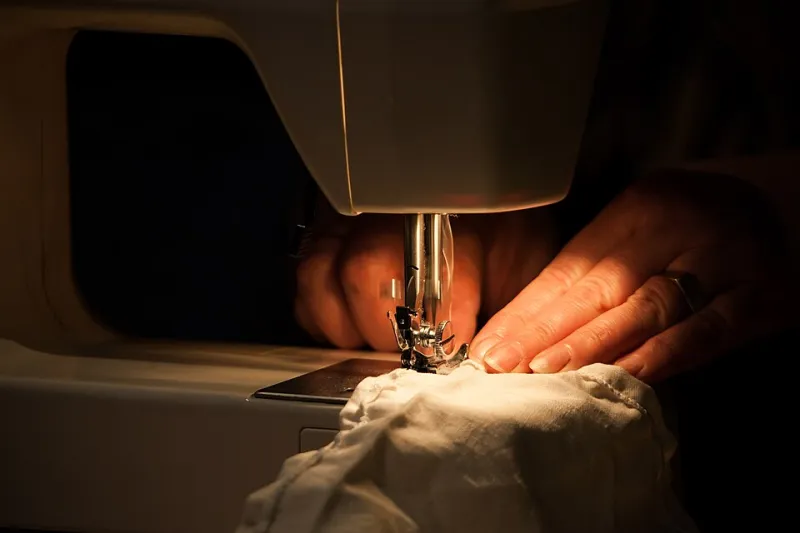
For lining, choose cotton lawn, viscose or a clean old bedsheet. Pre-wash it. Cut the lining from the same pattern pieces, leaving out the facings if you are binding the edges. Use a walking foot if you have one, a longer stitch length and plenty of clips. Quilted seams can be thick, so trim and grade them where possible.
Bias binding is your friend. Make it from leftover lining or buy a good cotton binding. Bind the inside seams, the cuffs and the hem. It looks tidy, it strengthens the jacket and it gives you a place to add a flash of colour. Buttons can be wooden, recycled or mismatched. Patch pockets are useful and forgiving.
Visible mending, on purpose
Before you cut, decide whether any weak spots should become part of the design. A small patch in contrasting fabric, a line of running stitch or a sashiko-style repair can be a feature rather than a flaw. This is the opposite of hiding the cloth’s history. It is also a useful skill to practise on a project where perfection is not the point.
Add a label with the date, the charity shop and the name of the person who wore it before, if you know it. That small record turns a jacket into an heirloom.
Sew it together in Beccles
A project like this is easier with company. We are planning a monthly Saturday sew-along in Beccles through 2026, with a room, a kettle and space to spread out. Bring your machine, your bedspread and your questions. There is no competition and no deadline beyond the one you set yourself. The point is to keep each other going when the binding gets fiddly.
If you are starting alone, set small goals: source the cloth in January, toile in February, cut in March. By autumn you could have a jacket that cost very little and means a great deal. That is the Beccles quilt coat challenge in spirit: not a race, but a reason to sew slowly and well.