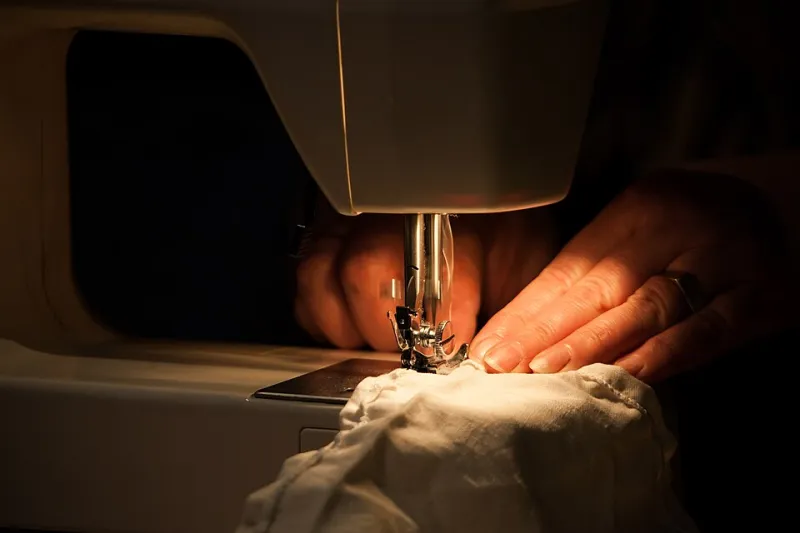
The Mending Table Test: Could Beccles Lead the Repair Café Movement?
Photo: Infrogmation of New Orleans, CC BY-SA 3.0, via Wikimedia Commons
The UK's repair café movement has moved from niche to normal. In 2026, with clothing prices still biting, landfill targets under scrutiny and a growing discomfort with throwaway fashion, the idea of a monthly session where people bring broken things and learn to fix them no longer sounds eccentric. It sounds sensible. The question for Beccles is not whether a repair café would be nice. It is whether the town is ready to run one — and whether sewing should be at the front of the queue.
We think it should. Beccles already has the raw material: skilled sewers, active craft groups, a strong charity-shop culture and a stubborn Suffolk instinct not to bin something that can still be worn. What it needs is a format, a venue and a small group of people willing to give up a Saturday morning.
Why 2026 feels like the right moment
The first UK repair cafés appeared in the 2010s, often focused on electricals and bicycles. Since then, the idea has spread into textiles, furniture and everyday household items. In 2026, the pressure points are obvious. Cheap clothes are still cheap, but not as cheap as they were, and the environmental cost of constant replacement is harder to ignore. Alterations services are busy, but many people cannot afford a professional fix for a £20 jumper or a school uniform that needs letting down.
A repair café is not a free alterations service, and it should not pretend to be. It is a social workshop where people bring an item, sit down with a volunteer and learn how to make it last longer. The repair is the hook; the skill-sharing is the point. That distinction matters, because it keeps expectations realistic and stops the volunteers from becoming an unpaid tailoring factory.
What a Beccles version could look like
Picture one Saturday a month, 10am to 1pm, in a warm room with good light. Beccles Library or a church hall would both fit the bill. There is a triage table near the door, a textile station with three or four volunteers, two sewing machines, a hand-sewing corner, a box of buttons, zips, patches and thread, and a kettle doing steady business.
Visitors book a slot in advance or turn up with a small item. A volunteer looks at the repair, explains what is possible, and either fixes it with the owner watching or teaches them to do it themselves. Simple jobs — buttons, hems, split seams, patches, zip pulls — are ideal. More complex work, such as relining a coat or resizing a jacket, gets advice rather than a promise. Clear limits protect everyone.
The skills are already in the town
Beccles does not lack sewing knowledge. It has people who alter school uniform, run craft groups, quilt, knit, make curtains and repair their own clothes. Some have years of experience; others are enthusiastic beginners who can thread a needle and follow a seam. A repair café does not need a room full of master tailors. It needs a handful of patient people who can say, 'Let's have a look at that together.'
The volunteer mix matters. You want at least one person confident with a machine, one who is happy hand-sewing with visitors, and one person on the door to manage bookings and tea. Training can be informal: a short session on how the café works, what to accept and when to say no. Mentoring is built in, because every repair teaches the volunteer something too.
The unglamorous checklist
Any honest guide to starting a repair café has to mention the boring bits. Public liability insurance is essential. Risk assessments should cover needles, pins, scissors, irons and sewing machines. If volunteers bring their own machines, check PAT testing and portable appliance safety. Have a first-aid kit and a clear needle-sharp disposal pot. Think about safeguarding if young people attend, and have a simple data policy for booking details.
You also need a donations policy. Some repair cafés ask for a small contribution per item; others run a honesty jar. Either works, but it should be visible and consistent. Decide in advance what the café will not touch: leather, upholstery, delicate bridal wear and anything that needs a professional finish are sensible exclusions. Record what gets fixed and what gets turned away. That data helps you improve and makes funding applications easier.
Why sewing should lead
Textiles are one of the most visible parts of the throwaway problem. A split seam or a missing button is often enough to send a garment to the back of the wardrobe or the bin. Sewing is also one of the most teachable repair skills. You can show someone how to sew on a button in five minutes. You can demonstrate a ladder stitch in ten. Visible mending — a contrast patch, a row of sashiko-style stitches, a bold darn — turns a repair into something people are proud to wear.
In 2026, that matters. The UK conversation about fashion is shifting from 'buy less' to 'keep what you have'. A repair café makes that shift practical and social. It gives people a place to ask questions without feeling judged. It also gives experienced sewers a reason to pass on skills that might otherwise stay in a spare room along with the sewing machine.
A modest pilot plan
Start small. A three-hour pilot with six volunteers and a dozen booked items is enough to test the idea. Partner with the library or a church hall, advertise through local noticeboards and social media, and ask people to bring one item only. Keep a simple record of repairs attempted, repairs completed and questions asked. At the end, ask volunteers and visitors what worked and what did not.
If the pilot goes well, a monthly rhythm is realistic. If it does not, you have lost a Saturday morning and learned something useful. The risk is low; the potential is high. Beccles could run a textile repair café that suits its size and character — not a grand city project, just a good local habit.
The mending table test
So is Beccles ready? We think so, provided the town starts with modest expectations and the sewing community puts its hand up. A repair café will not fix everything, and it will not replace professional alterations. But it can stop a few hundred garments from being discarded, teach a few dozen people to use a needle, and make mending visible in the middle of town. That is a test worth running.