When Beccles Goes Dark by Four: Setting Up a Sewing Corner That Looks After Your Eyes
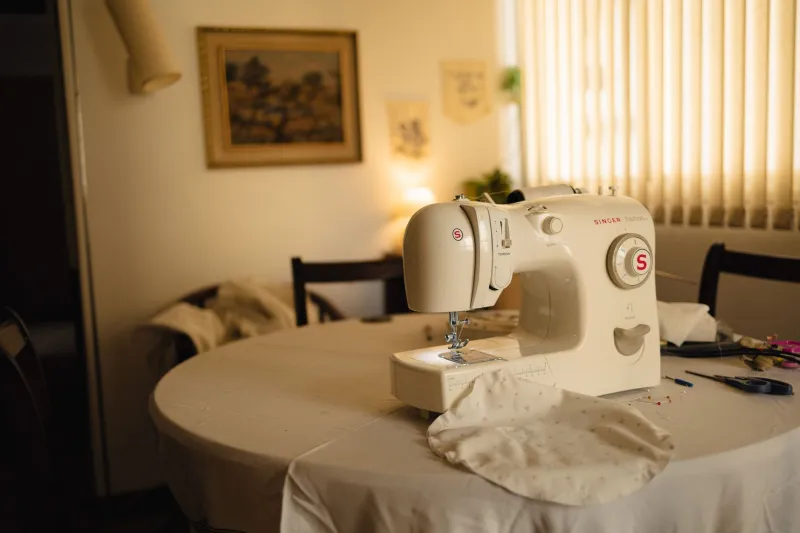
By mid-November, Beccles has that familiar after-school feeling: the sky over the Waveney turns smudgy grey by half three, the shop windows start glowing, and by four o’clock you’re switching on lamps just to find the kettle. For sewists, this is the season when a favourite hobby can begin to feel like hard work. You squint at a seam, lean closer to the needle, and wonder why the navy thread looks black and the black thread looks like a mistake.
The answer isn’t to stop sewing until March. It’s to set up your corner so the dark evenings work with you rather than against you. Good light, a sensible position and a bit of honesty about which jobs suit lamplight can make all the difference — and help you avoid the headaches, tired eyes and late-night unpicking that come from straining at the machine.
Start with the room, not the lamp
The temptation is to buy the brightest lamp you can find and point it straight at the needle. But a single blazing task light in an otherwise dim room is tiring. Your eyes have to constantly adjust between the brilliant patch of fabric and the shadowy edges of the table, the floor and the wall. The result is that washed-out, gritty feeling by nine o’clock.
Aim for layers of light instead. Keep the main ceiling light on, or add a softer floor lamp nearby, so the room feels evenly lit. Then bring in a focused task lamp for the actual sewing. You want the area around the machine to be bright and comfortable, not glaring. If your lamp has a shade, use it. If it doesn’t, angle it so the bulb isn’t visible when you’re sitting down.
Position matters, too. For most right-handed sewists, the task light works best coming from the front-left, so your hand and the machine head don’t cast a shadow over the needle. Left-handed sewists should reverse that. Try it before you commit: move the lamp around, sit down, thread the machine and see where the shadows fall.
The lamp that earns its place
Not all bright lamps are good sewing lamps. Look for one with an adjustable arm, a decent weighted base and a dimmer if you can find it. A neutral-white LED around 4000K is a practical choice for sewing: warm enough not to feel clinical, cool enough that colours don’t turn muddy. If the box mentions a high colour rendering index — CRI 90 or above — that’s a bonus, because it means the light shows colours more faithfully.
A clip-on lamp can work if your table has a suitable edge, but avoid anything that wobbles every time you press the pedal. A floor-standing lamp behind your shoulder can be surprisingly good for hand-sewing, especially if you angle it over your work rather than into your eyes. And please, don’t rely on a phone torch balanced on a reel of thread. It’s fine for finding a dropped pin, not for hemming a skirt.
Colour is a daylight job
Here’s the uncomfortable truth about winter sewing: artificial light lies about colour. Under a warm bulb, a dark green can look brown, a deep red can look flat, and navy and black become best friends. Even a good neutral lamp won’t match proper daylight, especially on a grey Beccles afternoon.
So build in a daylight check. If you’re matching thread to fabric, cut a small snip of cloth and take it to the window in the morning, or step outside under the porch light if the sun makes an appearance. Keep a labelled box for dark fabrics and another for light ones, so you’re not rummaging through a black bin bag of scraps at eight in the evening. If you’re working with something expensive or emotionally important — a coat to alter, a piece of inherited cloth — do the colour decisions by day and the straightforward sewing by night.
Give your eyes a fighting chance
You don’t need a lecture on eye health to know when you’ve been staring too long. The signs are familiar: dry eyes, a stiff neck, a sudden urge to hold the fabric six inches from your nose. Try the twenty-minute rule. Set a timer, and when it goes off, look across the room or out of the window for twenty seconds. Blink properly. Roll your shoulders. Then go back.
A magnifier with a built-in light can be a genuine help for hand-sewing, threading needles or unpicking tiny stitches, but it shouldn’t replace a proper pair of glasses. If you’ve been squinting more than usual, book an eye test. It’s not dramatic; it’s just sensible maintenance, like oiling the machine.
Also check your posture. If you’re hunched forward to see, raise the machine or lower your chair. Keep the needle area at a comfortable height, not up by your chin. A cheap foam cushion on the seat can do more for your sewing than a fancy presser foot.
Jobs for lamplight, jobs for daylight
Some sewing jobs are perfectly happy under a good lamp. Straight machine seams on mid-tone fabrics, basic alterations, basting, pressing, attaching buttons, hand-sewing a hem that you’ve already pinned in daylight — all fine. Repetitive piecing is good lamplight work because your hands know the rhythm and your eyes aren’t making fine judgements every second.
Other jobs deserve the greyest, most honest daylight Suffolk can offer. Cutting out dark fabrics is top of the list. So is matching prints, marking darts on black wool, trimming seam allowances on fine cloth, and deciding whether two shades of navy actually go together. If you wouldn’t trust a pub candle to show you the difference, don’t trust a lamp.
A simple habit helps: keep a small tray or basket for ‘daylight jobs’. When you notice yourself hesitating over a colour or leaning in to see a stitch, put the piece in the tray and move on to something else. The tray becomes your morning to-do list, and you stop making tired decisions at night.
A small winter ritual
Before the light fades, set yourself up. Wind a bobbin, choose the thread, press the fabric, and leave the machine ready. Then when the lamps go on, you can sit down and sew rather than spend twenty minutes hunting for the seam ripper. At the end of the evening, stop while you’re still fresh — not when you’ve made three mistakes in a row.
Beccles winters are long, but they’re also made for gentle projects: a hem taken up by lamplight, a button sewn back on, a patch applied to a favourite jacket. With the right light and a bit of daylight honesty, you can keep stitching through the dark evenings without ruining your eyes or your enjoyment.