The Case for Slower Alterations: What a Proper Hem Really Asks of Beccles Sewists
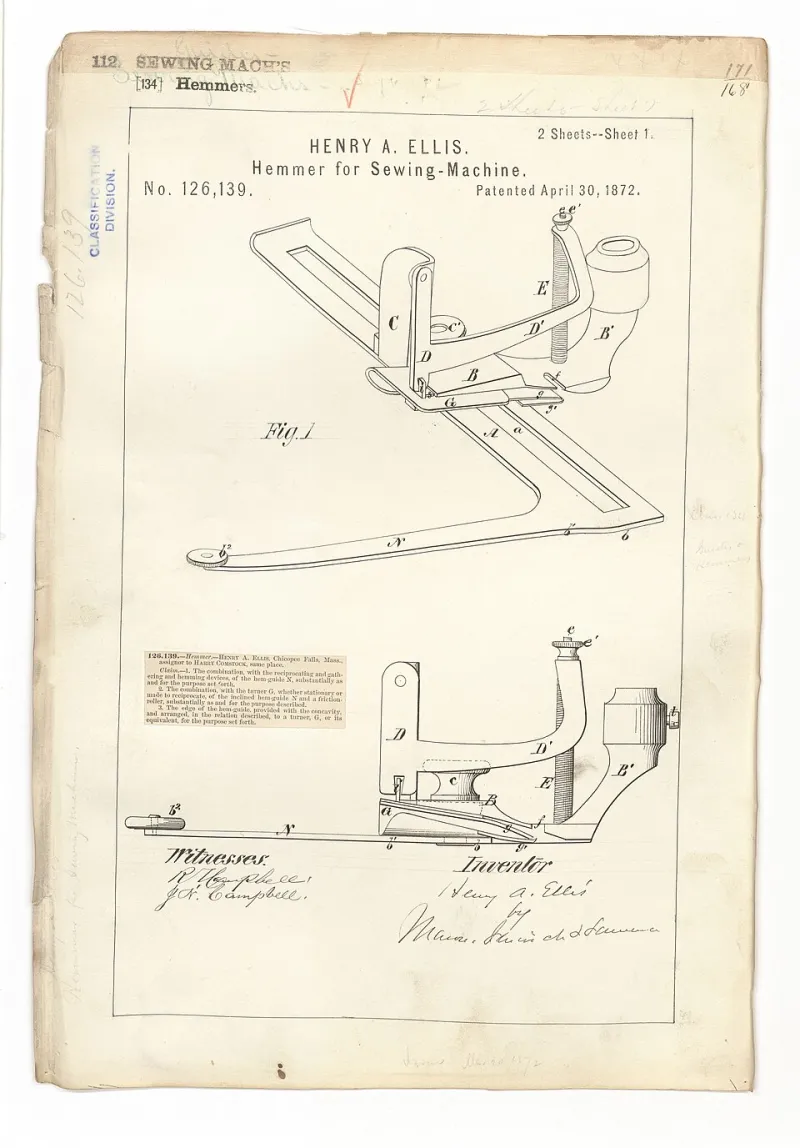
Photo: Department of the Interior. Patent Office. (1849 - 1925), Public domain, via Wikimedia Commons
On a damp November morning in Beccles, the question is familiar. Someone has trousers that need taking up, a skirt that hangs a little long, or a coat lining that has given up, and they wonder whether it can be sorted by lunchtime. The internet has promised a five-minute hem. The machine is already out. Surely it is a small job?
It is a small job. It is not a five-minute job.
That is not a criticism of anyone’s skills. It is a plea for a more honest relationship with alterations. In a town where the charity rails are good, the market is friendly and the urge to make do is strong, slow alterations are not a luxury. They are how clothes stay in the wardrobe instead of going back to the bag.
The five-minute promise versus the Waveney reality
Quick hemming videos are seductive because they remove the boring bits. They show the needle, the neat line of stitching and the finished result. They rarely show the thread change, the test seam, the walk to the iron or the second try-on. A plain trouser hem, done properly at home for the first time, is closer to 45 to 60 minutes once you count setting up, measuring in shoes, pinning, pressing, stitching and pressing again. A second pair in the same session might take 25 to 30 minutes. A professional with a blind hemmer may work faster, but they still charge £12 to £20 in many UK shops because speed is not the same as ease.
None of this means you should avoid home sewing. It means we should stop pretending that a careful repair is a race.
What actually takes the time
Pressing, mostly. A hem that is pressed before stitching behaves itself. A hem pressed afterwards looks intentional. Fabric is the other culprit. A stable cotton is forgiving. A slippery lining, a stretchy knit or a curved hem asks for more pinning, more patience and sometimes a different foot. Lined skirts need the lining hemmed separately so it hangs inside the outer layer. Jeans often need the original hem kept, which is fiddly but worth it. A coat hem may need to be tacked by hand so the stitches do not show.
The stitching is rarely the hard part. The preparation is.
A realistic repair timetable
| Job | Realistic home time | Typical UK pro cost | Honest verdict |
|---|---|---|---|
| Straight trouser hem | 45–60 min first time; 25–30 min repeat | £12–£18 | Home-friendly if the fabric is stable |
| Jeans original hem | 60–90 min | £18–£25 | Often worth paying for |
| Lined skirt hem | 60–75 min | £20–£30 | Pro if the lining is tricky |
| Invisible zip replacement | 60–90 min | £18–£28 | Practise on a scrap first |
| Darning a knit jumper | 30–60 min | £10–£20 | Home if you enjoy visible mending |
| Reattaching coat buttons | 10–15 min | £5–£10 | Definitely home |
| Taking in a waistband | 45–75 min | £15–£25 | Pro for lined or structured garments |
These are not precise quotes. They are a reality check. A local alterations business has rent, insurance, machines and the experience to know when a garment will fight back. A home sewer has time, curiosity and the chance to learn. Both can be good value.
Lessons from Beccles makers
One reader told me she rushed a lining hem before a wedding and spent the day aware of it twisting under her skirt. Another spent an evening on a wool coat hem, pressed it properly and has worn the coat for years. The difference was not talent. It was time. At a Saturday stitch-and-chat, the most common regret is not the stitching itself. It is the pressing that was skipped.
Beccles is full of people who know how to make things last. That instinct is worth applying to alterations, too.
When to hand it over
Pay a professional for structured jackets, coats, leather, sequins, bridal wear, jeans with a chain-stitch hem and anything that needs an overlocker finish you cannot replicate. Ask for recommendations at a fabric swap, a sewing group or through a local word-of-mouth network. A good alterations person will tell you what can wait and what needs doing properly.
A slower alterer’s checklist
- Measure in the shoes you will actually wear.
- Pin standing up, then sit down to check the hem does not pull.
- Press the hem before you stitch it.
- Run a test seam on a scrap of the same fabric.
- Finish raw edges if the garment will be washed often.
- Try the garment on before you trim anything.
- Press again, then leave it overnight if you are unsure.
The five-minute hem is a lie, but a slow hem is not a punishment. It is a small act of care. In Beccles, that feels like the right way round.