A Lid Full of Maybes: Giving Inherited Buttons a Second Life in Beccles
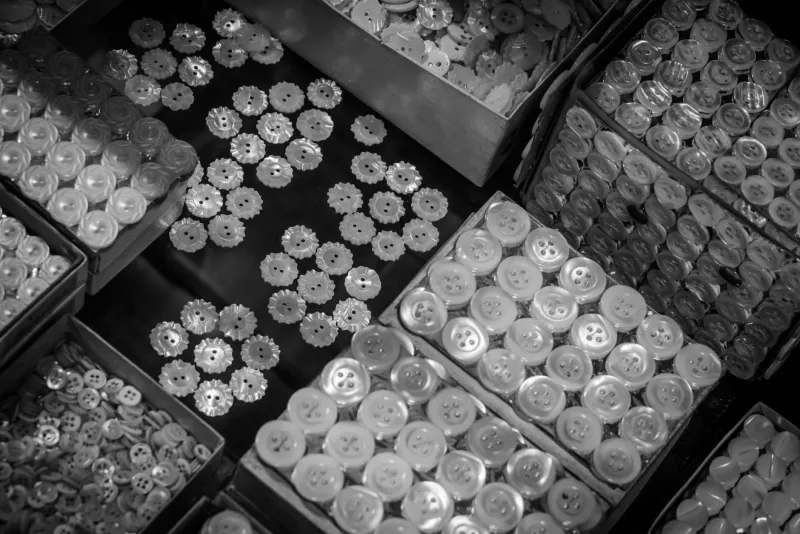
Somewhere near the back of a sewing cupboard in Beccles, there is almost certainly a tin. It might be an old Quality Street tin, a rust-spotted tobacco tin or a jar that once held pickled onions. Inside is a rattling heap of buttons: pearly shirt buttons, wooden ones from a duffel coat, tiny glass spares, a lone brass number from a blazer. The lid no longer fits properly. Nobody remembers exactly where it came from.
That tin is easy to dismiss as clutter. It is also a small, useful time capsule. In an age when a card of new plastic buttons can be ordered in minutes, a box of oddments asks something different of a sewist: look first, choose slowly, make do with what is already here. In Beccles, where charity rails and Saturday car-boot tables turn up plenty of these tins, that feels less like nostalgia and more like good sense.
A working palette, not a museum
The temptation with inherited buttons is to treat them as precious. Every chipped disc becomes an heirloom; every mismatched pair gets wrapped in tissue and never used. But a button jar that is never opened is just a smaller kind of landfill. The better approach is to treat the tin as a working palette. Some buttons will be strong enough for a coat. Some will be pretty enough for a cuff. Some will be too brittle, too small or too ugly, and that is fine. Not everything has to be saved.
A simple sort helps. Make one pile for buttons you would happily sew on this month, one for buttons that need a clean or a small repair, and one for the ones you keep because they remind you of a person or a garment. That last pile can live in a separate envelope if you like. The rest should stay in circulation, ready to be used rather than admired from behind a closed lid.
Start with a tray, not a spreadsheet
Tip the tin onto a baking tray with a lip so the runaway ones do not ping across the kitchen floor. Sort roughly by size first, because size is the thing that decides whether a button will actually work. Then group by colour and material if you fancy it. An ice-cube tray or a muffin tin makes a decent temporary home for the sorted piles, though a row of small jars works just as well.
Do not try to catalogue the whole tin in one sitting. This is meant to be a pleasure, not an admin task. Keep a small dish of maybes nearby and let them wait. If you have a button gauge, use it. If you do not, a cheap plastic ruler is fine. Measure the diameter in millimetres and note whether the button is flat, domed or shanked. A 15mm shirt button and a 20mm coat button can look similar in a heap but behave very differently at a buttonhole.
Wash gently, and know when to stop
Most ordinary plastic, glass and metal buttons can be cleaned in warm water with a drop of mild washing-up liquid and a soft toothbrush. Work around the rim and through the holes, rinse well and dry them flat on a towel. Do not leave them sitting in water. Dry metal buttons straight away with a soft cloth, especially the shanks, where water likes to hide.
Some buttons should not be soaked at all. Wood, leather, painted finishes, glued-on faces, foil-covered buttons and very old plastics can be damaged by water or by rough handling. Test a hidden spot first if you are unsure. A cotton bud is useful for cleaning around a shank without drowning the whole button. Once dry, store buttons in a breathable tin or box rather than sealing them away while still damp. A little air is kinder than a fuggy cupboard.
The back of a button is surprisingly chatty
Turn a few buttons over and you will find backmarks, maker names, metal shanks and moulded patterns that can tell you something about where and when they were made. Some carry the name of a British maker; others have no mark at all. Shank buttons were often used on coats and tailored garments because they sit proud of the fabric. Two-hole and four-hole flat buttons are the everyday workhorses. Mother-of-pearl, horn, glass, metal and celluloid all turn up in old tins, sometimes in the same handful.
You do not need to become a button historian to use them well. It is tempting to try the old hot-pin test for Bakelite, but it is not kind to a button you might want to keep, and it is not necessary. What matters more is whether the button is strong, clean and the right size for the job. If it is heavy, it may need interfacing or a backing button on fine fabric. If it is fragile, save it for a decorative spot rather than a placket that gets opened every day.
Putting odd buttons to work on modern clothes
Mismatched buttons look best when they look intentional. On a shirt placket, keep the functional buttons the same size so the buttonholes behave, then let colour or material vary within a narrow family. On a cardigan, try quieter buttons down the front and one more characterful button at the top. On a cuff, a pocket flap or a back neck fastening, a single odd button can act like a small piece of jewellery.
For handmade clothes, vintage buttons can replace new notions without shouting about it. Sew them on with strong thread and give yourself a generous shank of thread underneath so the button sits properly. If the button is heavy, add a small backing button on the inside. If the fabric is light, fuse a scrap of interfacing behind the button area before you sew. Always test the button in the buttonhole before you commit. A beautiful button that will not pass through is just a tiny ornament with a job title.
There is also the quiet pleasure of harvesting buttons from worn-out garments before they leave the house. A shirt with a frayed collar may still have six good buttons. A coat that has gone beyond repair may have a set of excellent metal ones. Cutting them free and putting them in the tin is a small act of sustainability, and it keeps a useful shape in circulation instead of sending it to landfill.
Finding buttons in Beccles without simply buying more
The best button tins rarely arrive on purpose. They turn up in charity shops, at car-boot sales, in table-top boxes and through sewing swaps. Beccles has a good scatter of charity rails and local sales where a jam jar of oddments can be had for very little. Take a fabric swatch with you and a note of the sizes you actually need. Set a spending limit before you go. If a mixed bag contains the six buttons you want, it can still be a fair buy, but only if the rest will genuinely be used or passed on.
Share your duplicates. A sewing friend may have a dozen of the plain navy buttons you need and no use for the sparkly ones you have been hoarding. Swaps are cheaper than new notions and far more interesting. And while vintage buttons are a sustainable choice, they are not a rule. For activewear or a bag that gets heavy use, a modern button may simply be the stronger option. The point is to look at what is already in the tin before reaching for a card of new ones.
One button at a time
A button jar is not a to-do list. It is a palette, a prompt and a small record of the clothes that have already lived a life in Beccles. The story only continues when the buttons are used. Pick one out this week, find a garment that needs it, and sew it on properly. The tin will still be there afterwards, a little lighter and a little more useful.